I Bonds Now Pay the Highest Fixed Rate Since 2006
I bonds bought from November 2026 through April 2027 pay 5.51%, with a 1.40% fixed rate that lasts for the life of the bond.
Key takeaways
- I bonds issued from November 1, 2026, to April 30, 2027, pay 5.51%, according to TreasuryDirect, the U.S. Treasury’s official site.
- The fixed rate rose from 0.90% to 1.40%, its highest level since November 2006.
- That fixed rate stays with the bond for up to 30 years. Only the inflation part changes.
- You can buy up to $10,000 per person per year at TreasuryDirect.gov. The money is locked for 12 months.

On November 1, 2026, the fixed rate on new I bonds rose from 0.90% to 1.40%. That half-point jump puts it at its highest level since 2006.
Add the current inflation adjustment and new bonds pay 5.51%. The inflation part will move.
The 1.40% won’t: it stays locked in for as long as you hold the bond, up to 30 years.
Need money now? I bonds won’t help this month.
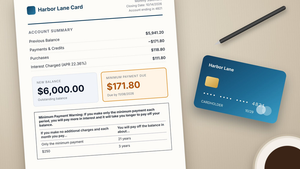
Money in an I bond can’t be touched for 12 months, and cashing out before five years costs you three months of interest. If you’re dealing with a bill you can’t cover or a credit card balance that keeps growing, start here instead:
- How to pay less interest on your credit card
- Is credit card debt draining you? When a personal loan can help
- How to budget when money is tight
Current I bond composite rate
The total rate combines a fixed return with an inflation-adjusted component. Both determine how much your I bond earns.
How the 5.51% rate breaks down
Every I bond pays a composite rate made up of two components:
Set when you purchase the bond and locked in for its entire life.
The six-month inflation rate, equivalent to 4.08% on an annualized basis.
It is tied to the Consumer Price Index (CPI), which increased from 330.213 in March 2026 to 336.940 in September 2026. The inflation component resets every May and November.
How the Treasury calculates the rate
The U.S. Treasury combines the fixed and inflation rates using a specific formula. The result is slightly higher than simply adding the two percentages.
Composite rate formula
Putting the numbers together
How does it compare with the previous rate?
| Purchase period | Fixed rate | Composite rate |
|---|---|---|
| November 2026 onward | 1.40% | 5.51% |
| May–October 2026 | 0.90% | 4.26% |
The new composite rate is 1.25 percentage points higher than the previous one. The fixed rate also increased, which matters because it remains part of the bond’s return even when future inflation adjustments change.
A fixed rate that was 0% just a few years ago
The headline 5.51% will change. If inflation cools, the variable part drops next May and the composite rate drops with it.
The fixed rate is what you keep, and it’s what makes this window stand out:
| Step | What it is | Math | Result |
|---|---|---|---|
| 1 | The fixed rate | 1.40% | 1.40% |
| 2 | The six-month inflation rate, doubled to make it a yearly rate | 2 × 2.04% | 4.08% |
| 3 | A small extra for applying the fixed rate to the inflation-adjusted value | 1.40% × 2.04% | 0.03% |
| Total | Composite rate | 1.40% + 4.08% + 0.03% | 5.51% |
Step 3 is exactly 0.02856%. The total, 5.50856%, rounds to 5.51%.
During the 2022 inflation spike, I bonds paid up to 9.62%, but with a 0% fixed rate. Those bonds only keep pace with inflation. A bond bought now beats inflation by 1.40 points a year, every year, for as long as you hold it.
What you can earn, starting at $25
You don’t need thousands of dollars to buy I bonds. The minimum is $25, and you can buy any amount above that, down to the penny.
Here’s roughly what you’d earn in your first six months at 5.51%:
| Amount | Interest in the first six months |
|---|---|
| $100 | about $2.75 |
| $1,000 | about $27.55 |
| $10,000 | about $275 |
The interest compounds every six months. After that, your rate becomes 1.40% plus whatever inflation is doing:
- If inflation drops to 2% a year: your bond earns roughly 3.4%.
- If inflation stays near 4%: your bond earns roughly 5.4%.
- If prices fall (deflation): Treasury rules don’t let the composite rate drop below 0%, so the bond’s value won’t fall below what you paid.
Debt first or I bonds first? An example
This is a hypothetical example to show the math.
Jordan has $1,200 in savings and a $1,200 credit card balance at a 24% APR. Here’s what each choice is worth over a year:
| Option | What happens in a year |
|---|---|
| Put $1,200 in I bonds | Earns about $66 in interest, but the card keeps charging about $288 |
| Pay off the $1,200 card balance | Saves about $288 in interest |
Paying off the card wins by more than $200. I bonds make sense for money left over after high-interest debt is gone and an emergency fund is in place.
The rules before you buy
I bonds come with trade-offs that a savings account doesn’t have. The full rules are on TreasuryDirect’s I bonds page:
- Purchase limit: $10,000 per person per calendar year in electronic bonds.
- Where to buy: only at TreasuryDirect.gov. Banks and brokers don’t sell them.
- Minimum: $25.
- Lockup: you can’t cash out for the first 12 months.
- Early redemption penalty: cash out before five years and you lose the last three months of interest.
- Taxes: interest is subject to federal income tax but exempt from state and local taxes. You can defer the federal tax until you redeem the bond or it matures. The IRS explains the rules in Publication 550.
How to buy I bonds
To open an account at TreasuryDirect, you’ll need:
- A Social Security number
- A U.S. address
- A checking or savings account to pay from
- An email address
Then:
- Open an individual account at TreasuryDirect.gov. You may be asked to verify your identity.
- Choose to buy a Series I savings bond and enter the amount, from $25 up to $10,000.
- Pick the purchase date and the bank account the money comes from.
- Confirm. The bond shows up in your account, and it earns interest from the first day of the month you bought it.
Is it worth buying I bonds now?
For money you won’t need for at least a year, a 1.40% return above inflation, backed by the U.S. government, is hard to beat. Here’s what to weigh:
- Pay off credit card debt first. Cards that charge interest average a 22.36% APR, according to the Federal Reserve (Q3 2026). Every dollar that pays down that balance saves you about four times what it would earn in an I bond. And don’t count on those rates dropping soon: here’s why a Fed pause hasn’t lowered card APRs.
- Build an emergency fund before you lock money up. The 12-month lockup means the cash isn’t there if your car breaks down or your hours get cut. Keep emergency savings in a savings account you can reach anytime.
- Savings rates can fall. Your fixed rate can’t. High-yield savings and CD rates follow the Fed, which held its benchmark rate at 3.75% to 4.00% at its October 28, 2026 meeting. When the Fed eventually cuts, those yields drop. Your 1.40% above inflation stays.
- Buy late in the month. I bonds earn interest for the whole month you buy them, even if you buy on the last business day. You get a full month of interest for a few days of holding.
- Mind the deadline. The 1.40% fixed rate applies to bonds bought through April 30, 2027. On May 1, the Treasury sets a new fixed rate, which could be higher or lower.
What happens to the I bonds you already own
Older bonds keep the fixed rate they were issued with, and they get the new inflation rate (4.08% annualized) for their next six months, starting on their own reset date. That means:
- Bonds with a 0% fixed rate, like those bought between May 2020 and October 2022, will earn about 4.08%.
- Bonds with a 0.90% fixed rate, bought between November 2025 and October 2026, will earn about 5.00%.
- Bonds with a 1.30% fixed rate, bought between November 2023 and October 2024, will earn about 5.41%.
If you hold 0% bonds, moving some of that money into new 1.40% bonds can make sense over the long run, within the $10,000 annual limit. Check two things first. If the bond is under five years old, you’ll lose three months of interest. And cashing out makes all the interest it has earned subject to federal tax that year.
Frequently asked questions
What is the current I bond rate?
5.51% for bonds issued from November 1, 2026, through April 30, 2027. That includes a 1.40% fixed rate and a 4.08% annualized inflation rate.
Does the I bond fixed rate ever change?
No. The fixed rate you get at purchase stays with the bond for up to 30 years. Only the inflation part resets every six months.
Can I lose money on I bonds?
No. The composite rate can't drop below zero, so your bond's value never goes down. Cashing out before five years does cost you the last three months of interest.
This article is for informational purposes only and is not financial advice. Rates and rules are set by the U.S. Treasury. Check TreasuryDirect.gov before buying.
Sources
- TreasuryDirect – I bonds interest rates
- PennyCalc – I bond rate history
- MarketReview – Treasury sets 5.51% rate
- Tipswatch – Treasury sets I Bond fixed rate at 1.40%
- Federal Reserve – October 2026 FOMC statement
- Bureau of Labor Statistics – Consumer Price Index
- IRS – Publication 550
- Federal Reserve – G.19 Consumer Credit