Why your card’s interest rate just went up
Why did your credit card interest rate go up? Learn the common causes, notice rules and steps to lower the cost of your balance.
Credit card interest rate hikes: what you need to know
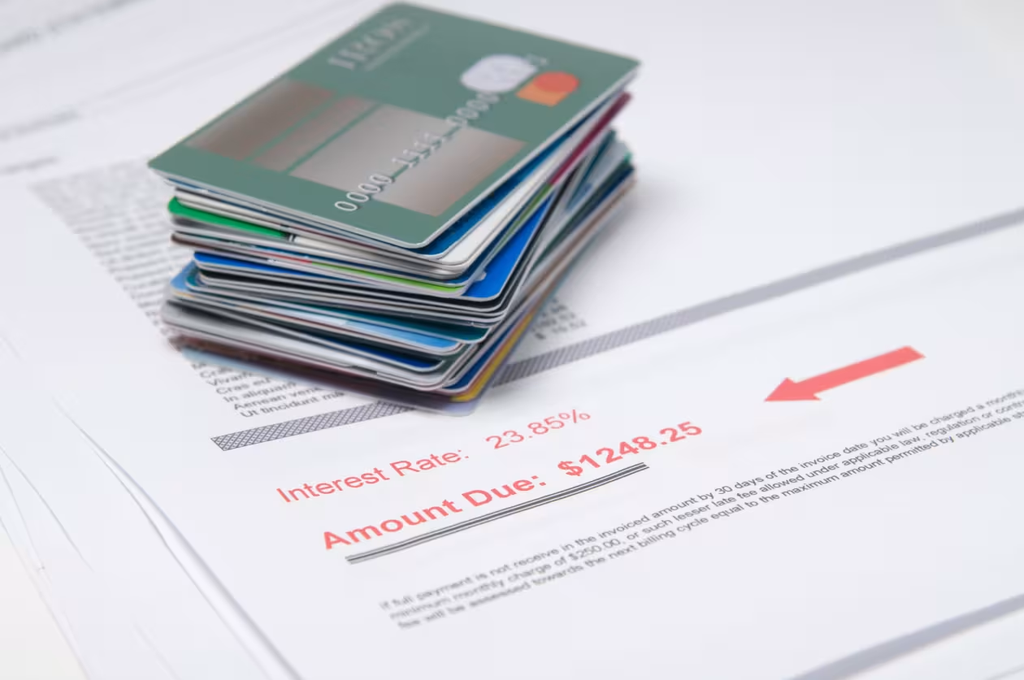
If your credit card interest rate suddenly looks higher, you are not necessarily imagining it and it does not always mean your credit score dropped.
Credit-card APRs can change for several reasons. Your card may have a variable APR tied to an index, a promotional rate may have expired, or a missed payment could have triggered a higher rate under certain circumstances.
And when the rate on a revolving balance rises, even a relatively small increase can make paying off debt more expensive.
So if you opened your statement and thought, “Why did my APR just go up?”, here is what may have happened—and what you can do about it.
Why Did Your Credit Card Interest Rate Go Up?
There is no single reason every cardholder sees a higher APR. The first step is to determine what type of rate you have and what changed in your account.
The most common explanations are:
- Your card has a variable APR and its underlying index increased;
- A promotional or introductory APR ended;
- You were more than 60 days late on a payment;
- Your card issuer changed the rate on new purchases after providing required notice;
- A special rate associated with a payment arrangement changed or ended.
The CFPB says card issuers generally must provide 45 days of advance notice before increasing an interest rate on new purchases after the first year of an account, although exceptions and different rules can apply depending on the type of rate change.
Your Credit Card Interest Rate May Be Variable
One of the biggest reasons a card’s APR can move is that the rate is variable rather than fixed.
A variable credit-card APR is generally composed of an index plus a margin. If the index increases, the APR can increase according to the terms of the card agreement.
The CFPB specifically identifies an increase in the index to which a variable rate is tied, such as the U.S. Prime Rate, as one circumstance in which an issuer can increase the rate on an existing balance.
What the Federal Reserve Has to Do With Your Card APR
The Federal Reserve does not set the APR printed on your credit-card statement.
However, Federal Reserve monetary policy can influence market interest rates and the benchmarks used by financial institutions.
In September 2026, the Federal Open Market Committee raised the federal funds target range by 0.25 percentage point to 3.75%–4.00%. The Fed said inflation remained elevated relative to its 2% goal.
That means a cardholder with a variable APR should pay attention when the Fed changes rates, but the Fed’s decision does not automatically mean every credit-card APR changes by exactly the same amount.
The timing and size of an adjustment depend on the specific card agreement and the index used.
Your Credit Card Interest Rate Could Rise After a Missed Payment
A late payment does not automatically mean your APR will increase immediately.
However, the CFPB says an issuer can increase the interest rate on an existing balance when a minimum payment has not been received within 60 days after the due date, subject to the applicable rules.
This is one reason checking your payment history is important before assuming the increase came from the Federal Reserve.
What Happens After a 60-Day Delinquency?
If the rate increased because you were more than 60 days late, there may be a way back to the previous rate.
The CFPB says that if the rate increased because of a payment that was more than 60 days late.
That makes the payment history on your account worth checking before you simply accept a higher APR as permanent.
Your Promotional APR May Have Expired
Another common explanation is much less dramatic: the promotional period ended.
For example, a card might advertise a low or 0% introductory APR for a specified period. Once that period expires, the standard APR listed in the card agreement can apply.
The CFPB notes that the expiration of a temporary rate, such as a balance-transfer promotional rate, is one circumstance in which the rate on an existing balance can change.
Can a Credit Card Company Raise Your Interest Rate Without Warning?
Usually, the issuer must provide advance notice for certain significant changes, but the rules depend on the type of rate increase.
The CFPB says credit-card companies generally must provide 45 days’ advance notice before increasing the interest rate on new purchases after the first year of the account.
There are important exceptions, including changes involving variable rates and certain other circumstances.
For existing balances, the rules are more restrictive. An issuer generally cannot increase the rate on an existing balance except in specified circumstances.
What to Look for in Your Card Statement
If your APR changed, search your statement or issuer communication for language such as:
- Annual Percentage Rate (APR);
- Variable APR;
- Prime Rate;
- Effective date;
- Promotional rate expiration;
- Rate change notice.
The effective date matters because the new rate may not apply to every dollar already on the account in the same way.
How Much More Could a Higher Credit Card APR Cost?
The impact depends on your balance and how quickly you pay it down.
The Federal Reserve’s July 2026 data show that credit-card accounts assessed interest carried an average rate of 22.15%.
For a simple illustration, compare the interest component of a $5,000 balance at different APRs:
Simplified illustration assuming the balance never changes. Actual credit-card interest depends on the issuer’s daily balance methodology and payments.
The lesson is straightforward: the higher the APR and the longer you carry the balance, the more expensive the debt becomes.
And the broader debt environment shows why this matters. The New York Fed reported that U.S. credit-card balances reached $1.263 trillion in Q2 2026, up $21 billion from the previous quarter.
What to Do If Your Credit Card Interest Rate Increased
Don’t immediately close the card or transfer the balance without checking the details first.
Instead, take these steps.
1. Find Out Why the APR Changed
Call the number on the back of your card or review the rate-change notice.
Ask:
“Why did my APR increase, and what index or account event caused the change?”
If the representative says the increase was tied to the Prime Rate, ask for the current margin and index used to calculate your APR.
2. Check Whether the Rate Is Variable
Look at your card agreement.
If your APR is variable, an index-based adjustment may explain the increase. The CFPB specifically recognizes increases in an underlying index as one circumstance that can affect an existing balance.
3. Ask the Issuer for a Lower APR
It costs nothing to ask.
You can say:
“I’ve been making my payments on time, and I’d like to know whether you can lower my APR.”
The CFPB notes that consumers may be able to lower their rate by contacting the issuer, and that issuers generally must periodically review certain rate increases made after notice.
4. Stop Adding New Debt If the Balance Is Growing
If you’re carrying a balance from month to month, new purchases can make the problem harder to solve.
This is particularly important in an environment where consumer revolving credit remains elevated. Federal Reserve data show revolving credit outstanding at $1.357 trillion in July 2026.
If possible, use the card only for purchases you can pay off rather than allowing a high-interest balance to keep growing.
5. Compare a Balance Transfer Carefully
A balance-transfer offer can potentially reduce the interest you pay, but don’t compare only the promotional APR.
Check:
- Balance-transfer fee.
- Length of promotional period.
- APR after the promotion ends.
- Whether new purchases receive the promotional rate.
- Whether you can realistically repay the balance before the promotional period expires.
A lower rate is only useful if the complete terms actually reduce your borrowing cost.
Why This Matters More in October 2026
October can be an expensive month for many U.S. households.
Halloween spending, fall travel, household purchases and early holiday shopping can all put additional charges on a credit card.
If those purchases are carried into future billing cycles, the APR suddenly becomes much more important.
At the same time, October brings several major economic data points.
The BLS is scheduled to release September CPI on October 14, while the Federal Reserve’s next FOMC meeting is scheduled for October 27–28.
That makes October a good month to review your card terms before holiday spending accelerates.
The broader consumer picture also deserves attention.
The Conference Board reported that U.S. consumer confidence fell to 81.9 in September 2026, its third consecutive monthly decline, amid concerns about financial well-being, inflation and the labor market.
In other words, if your budget already feels tight, carrying a balance at a high APR can make a difficult month even more expensive.
Your Credit Card Interest Rate vs. Your Credit Score
A higher APR does not necessarily mean your credit score suddenly fell.
Credit-card pricing can reflect several factors, including:
- The card’s benchmark or index.
- The card’s fixed margin.
- Promotional-rate expiration.
- Payment history.
- The terms of your particular account.
Your credit score can still matter when applying for new credit, and lenders may use credit information when determining whether to approve an application and what terms to offer.
But if your existing card’s APR changed, don’t assume your credit score is the explanation until you check the notice and card agreement.
When Should You Contact Your Credit Card Issuer?
You should consider contacting the issuer if:
- Your APR increased and you don’t understand why.
- You never received the expected notice.
- The rate appears inconsistent with your card agreement.
- Your promotional APR ended unexpectedly.
- You believe a payment was incorrectly marked late.
- You want to request a lower APR.
- You are struggling to make the minimum payment.
If you believe the rate was increased incorrectly, the CFPB advises consumers to contact the card issuer.
If the problem cannot be resolved directly with the issuer, consumers can also submit a complaint through the Consumer Financial Protection Bureau.
Opinião do autor
A higher APR is easy to ignore when you’re focused on the number printed on your monthly bill.
But the interest rate is often where the real cost of carrying a credit-card balance shows up.
My view is simple: if you notice that your credit card interest rate has increased, don’t immediately assume you did something wrong and don’t simply accept the new number without investigating it.
Start with the statement. Find the effective date. Check whether the APR is variable. Look for a promotional expiration or late-payment issue.
The current environment makes that extra step worthwhile. Credit-card balances remain above $1.2 trillion, the Federal Reserve’s latest data show average rates above 22% for accounts assessed interest, and U.S. consumers are still dealing with elevated inflation and financial uncertainty.
Recommended Content
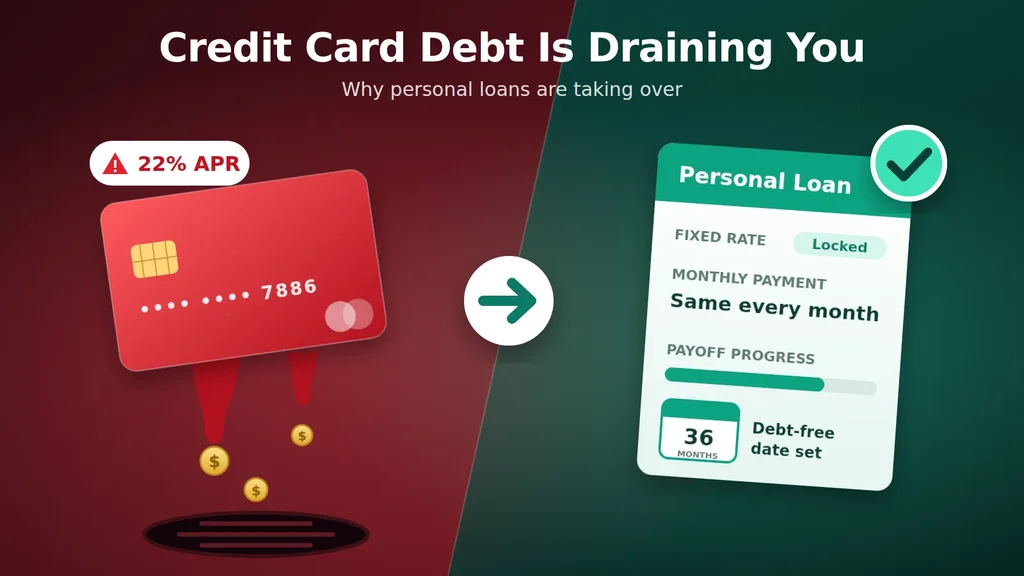
Credit card debt is draining you
See how personal loans cut costs, what rates look like after the Fed hike, and when to switch.
Continue reading * You will remain on the current website