
Purchase today, pay later: how could it impact your credit rating?
Wondering if Buy Now, Pay Later impacts your credit score? Discover the effects BNPL has on your credit reports, inquiries, missed payments, and collections.
The unseen impact of BNPL on your credit rating
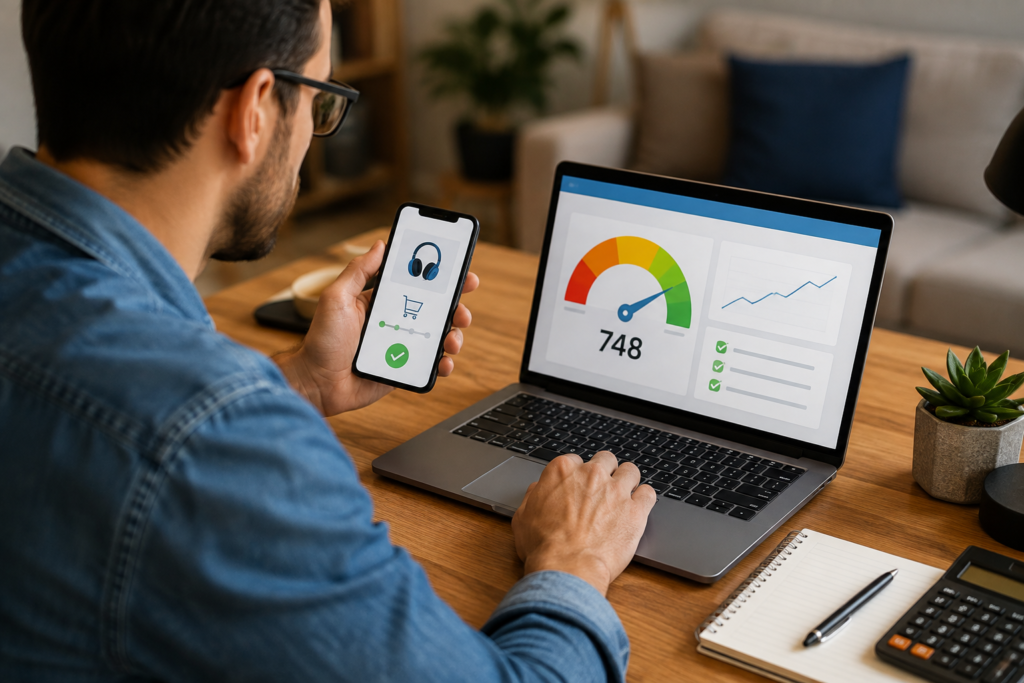
If you’ve ever picked Buy Now, Pay Later (BNPL) at checkout because paying $25 now feels easier than a $100 lump sum, you’re not alone.
BNPL has grown popular as a way to break purchases into multiple smaller payments.
However, what seems like a straightforward payment plan at checkout can actually complicate your credit score.
The good news is that simply using BNPL won’t necessarily damage your credit.
For Americans juggling tight budgets, credit card debts, and back-to-school costs, recognizing this difference is crucial.
Can buy now, pay later impact your credit score?
Yes, BNPL can influence your credit score, but the effect varies depending on the lender, the type of BNPL service, and how you handle payments.
In the past, many pay-in-four BNPL loans weren’t reported to the main credit bureaus. Because of this, timely payments usually didn’t improve your credit, but such accounts also typically didn’t lower your score.
The Consumer Financial Protection Bureau (CFPB) notes that most traditional pay-in-four BNPL plans historically have not shared payment records with nationwide credit reporting agencies.
At the same time, more BNPL firms are starting to report payment data to credit bureaus.
According to Bankrate, Affirm has begun sharing its payment plan data with Experian and TransUnion, though NerdWallet points out that credit reporting varies widely across BNPL providers.
Could paying BNPL installments on time boost your credit?
Possibly, yes.
This depends on whether your BNPL provider reports your account and payment details to a credit bureau or if the data is factored into a credit scoring model that includes BNPL information.
That said, don’t assume that every BNPL payment will boost your credit score.
The CFPB notes that most traditional pay-in-four BNPL loans typically weren’t reported, so paying on time usually didn’t help build credit like a credit card or installment loan would.
Paying on time is always smart money management, but it doesn’t guarantee that every BNPL payment will be counted as positive credit history.
Can missing a BNPL payment damage your credit?
Yes, it definitely can.
When a provider reports late payments, missed installments can show up on your credit report and might negatively affect your credit history.
Even if the provider doesn’t report a late payment right away, failing to pay can result in late fees, account limitations, or collections.
If your debt is handed over to a collection agency and reported to a credit bureau, it can seriously damage your credit score.
That’s why not seeing an immediate drop in your credit score doesn’t mean there’s no financial risk involved.
Why BNPL Will Matter More to Credit Scores in 2026
BNPL is no longer a niche option used just occasionally for online shopping.
The CFPB’s most recent market report showed that the six major BNPL firms studied had 53.6 million users in 2023, marking a 12% increase from the prior year.
In 2023, the typical consumer took out 6.3 BNPL loans per lender, and the average yearly amount borrowed from each lender grew to $848.
Meanwhile, the way credit scores are calculated is also changing.
This shift matters because BNPL purchases, once largely invisible to credit scoring models, are increasingly factored into lenders’ assessments of consumers.
The exact effect varies depending on the credit scoring model a lender applies, the data they access, and how the BNPL provider reports that information.
FICO and BNPL Data
FICO revealed new scoring tools that include BNPL transactions, developed in collaboration with Affirm to explore how BNPL repayment patterns might inform credit risk evaluation.
This doesn’t imply that every BNPL purchase will automatically lower your FICO score.
Rather, it marks a larger trend: BNPL activity is increasingly factored into the credit landscape.
The takeaway for consumers is straightforward.
Just because a BNPL purchase didn’t impact your credit score before, don’t assume it will stay hidden from lenders forever.
What Are the Biggest BNPL Risks to Your Credit?
The main dangers go beyond just missing a single payment.
BNPL can impact your credit through hard credit checks, payment records, collections, and overusing multiple BNPL plans.
The CFPB advises consumers to carefully examine the terms of any BNPL offer before agreeing, as credit inquiries and reporting practices differ widely.
Hard vs. soft credit inquiries
This difference is often overlooked.
A soft credit inquiry usually won’t impact your credit score, while a hard inquiry might cause a short-term dip.
Many typical BNPL options perform soft credit checks or skip traditional inquiries altogether. However, some extended-term financing plans might require hard credit checks.
For example, Bankrate notes that Affirm’s longer installment loans and PayPal Credit often involve a full credit evaluation.
Late payments and collections
The clearest danger is missing a payment.
The CFPB reports that BNPL providers often impose late fees, may block additional purchases, and can turn unpaid balances over to collection agencies.
If a debt collector reports the account to a credit bureau, that negative mark can impact your credit scores.
This risk is especially significant for BNPL users, as their monthly finances are often already tight.
A single $50 payment might seem easy to handle. But having five separate $50 installments due close together adds up to $250 in total payments.
This is where BNPL shifts from just being about one purchase to a challenge of managing your overall cash flow.
The Hidden BNPL Risk: Loan Stacking
A key concern for BNPL users is loan stacking, which happens when someone carries several BNPL loans simultaneously.
Research from the CFPB shows that around 63% of BNPL users had more than one active loan at once during 2022, and about a third borrowed from multiple BNPL providers.
This is important because your budget doesn’t distinguish whether you owe money to Klarna, Affirm, PayPal, Afterpay, or any other BNPL service.
All payments are still withdrawn from the same bank account.
The issue becomes even tougher to track when BNPL accounts aren’t reported consistently to credit bureaus.
In the past, lenders often lacked full visibility into a consumer’s total BNPL debts.
The dangers of juggling multiple BNPL plans
Consider that you have:
- $40 due for clothing
- $75 due for electronics
- $35 due for groceries
- $50 due for a household purchase
Individually, none of these payments feels too heavy.
When combined, these add up to $200 in extra monthly commitments.
If these payments coincide with rent, utilities, car loans, student debt, and credit card bills, missing one payment could trigger a domino effect.
The CFPB discovered that BNPL users tend to carry higher balances on other unsecured debts, such as credit cards and personal loans.
This doesn’t prove that BNPL causes financial hardship.
In fact, the CFPB warns that their data can’t confirm whether BNPL use leads to missed payments or if consumers already under financial strain are simply more inclined to use BNPL.
However, this link is significant enough to deserve careful consideration.
The Author’s Perspective
BNPL isn’t automatically a financial trap, but the mindset of focusing on small payments can make a big debt seem less daunting than it truly is.
This is the key point that every consumer needs to grasp.
The major shift in 2026 is that BNPL is becoming much more visible within the credit reporting landscape.
Reporting standards are changing as FICO rolls out new scoring models that include BNPL data, while key BNPL providers vary in how they report payment histories.
If someone uses BNPL just once to budget for an essential purchase and consistently pays on time, the potential risk to their credit is fairly low.
The concern grows when BNPL is used to fund purchases beyond one’s means, especially when multiple plans overlap and create a heavier payment load.
Your credit score is just one factor; ultimately, your monthly income and expenses determine whether you can handle all your payments.

Recommended Content
Tax-free school shopping: save more in 2026
Learn how tax-free weekends work, what qualifies and how to maximize your savings.
Continue reading * You will remain on the current website