
Mortgage rates are back above 7%: what homebuyers must do now
Mortgage Rates are back above 7%. Discover why rates are rising, how much more you'll pay, and what homebuyers should do now.
Mortgage rates keep climbing: homebuyers could pay the price
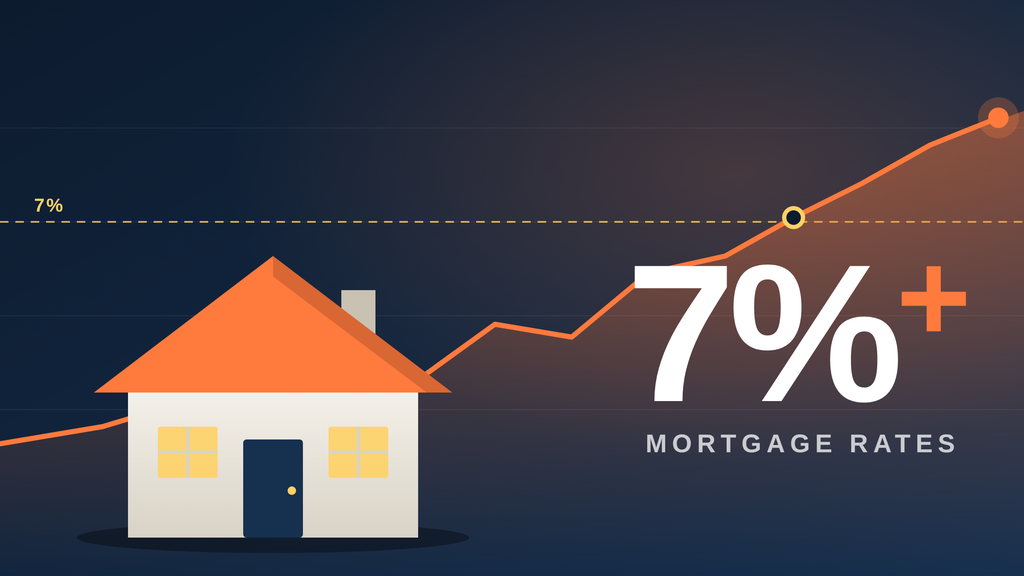
Mortgage Rates are rising again, and homebuyers across the United States are facing a more expensive path to homeownership.
The average 30-year fixed mortgage rate reached 7.40% in October 2026, making home financing more expensive for families already struggling with affordability.
Home prices remain high, inflation continues to pressure household budgets, and borrowing costs are making monthly mortgage payments harder to manage.
Even buyers with stable incomes and good credit may find themselves qualifying for less than they expected.
Understanding why Mortgage Rates are rising, how much more you could pay, and what steps you can take before applying for a loan can help you avoid costly decisions.
Before making an offer on a property, here is what every homebuyer needs to know and do now.
Why Are Mortgage Rates Back Above 7%?
Mortgage Rates have climbed above 7% again because of a combination of inflation concerns, movements in the bond market, and uncertainty about the economic outlook.
According to Freddie Mac, the average 30-year fixed mortgage rate reached 7.40% on October 8, 2026.
It subsequently eased to 7.24% on October 29 but remained above the 7% threshold.
This matters because mortgage rates influence how much buyers can borrow and how much of their monthly income goes toward housing.
Several economic factors help explain the increase.
The Role of Inflation and Treasury Yields
Inflation is one of the biggest factors influencing long-term borrowing costs.
In September 2026, the Consumer Price Index (CPI) increased 0.6% compared with the previous month, while annual inflation reached 3.7%, according to the U.S. Bureau of Labor Statistics.
Energy prices played a significant role in the increase, with gasoline prices rising 9.1% during the month.
Higher energy costs can affect transportation, household expenses, and broader inflation expectations.
When investors become concerned that inflation will remain elevated, they may demand higher returns on long-term investments.
One important benchmark is the 10-year U.S. Treasury yield.
Mortgage rates are not directly tied to this yield, but both are influenced by expectations about inflation, economic growth, and future interest rates.
What the Federal Reserve’s Decision Means for Buyers
The Federal Reserve’s monetary policy decisions often influence expectations across financial markets.
However, they do not automatically determine mortgage rates.
On October 28, 2026, the Federal Open Market Committee (FOMC) decided to maintain the federal funds target range at 3.75% to 4.00%.
The Fed also stated that inflation remained elevated.
For homebuyers, the important distinction is that the federal funds rate primarily affects short-term borrowing conditions.
Meanwhile, 30-year mortgage rates respond to longer-term market expectations.
This is why a Fed rate cut does not guarantee cheaper home financing.
Instead of relying exclusively on announcements from the central bank, buyers should monitor Freddie Mac’s weekly mortgage rate reports and request updated quotes from lenders.
How Higher Mortgage Rates Affect Homebuyers
A mortgage rate increase may look small when expressed as a percentage.
However, over a 30-year repayment period, even a difference of one percentage point can significantly change the amount a borrower pays.
The impact becomes especially important for buyers financing larger amounts.
Why Housing Affordability Is Getting Harder
Higher borrowing costs are only part of the problem.
Home prices and the limited availability of properties also influence how much buyers need to spend.
According to the National Association of REALTORS® (NAR), the median existing-home sales price reached $417,500 in September 2026.
This represented a 1.3% increase compared with September 2025.
Existing-home sales increased 1.5% month over month but remained 2.2% below the previous year’s level.
Available inventory stood at approximately 1.60 million homes, equivalent to 4.8 months of supply.
This creates a difficult situation for buyers who need financing.
Even if a home is listed at a price that seems affordable, a higher mortgage rate can increase the monthly payment enough to push the property outside the buyer’s budget.
For first-time buyers, this can mean:
- Postponing homeownership.
- Considering smaller properties.
- Looking in less expensive neighborhoods.
- Saving for a larger down payment.
For existing homeowners planning to move, higher rates can make it harder to justify replacing an older mortgage with a more expensive loan.
What Homebuyers Should Do When Mortgage Rates Exceed 7%
Seeing Mortgage Rates above 7% does not mean every buyer should abandon their plans.
However, it does mean that purchasing a home requires more careful financial preparation.
Rather than focusing only on the advertised interest rate, buyers should evaluate the full cost of financing.
Here are practical steps to consider before signing a mortgage agreement.
Compare Mortgage Offers From Multiple Lenders
One of the most important steps is requesting mortgage quotes from different financial institutions.
Banks, credit unions, and mortgage lenders may offer different rates, fees, and loan conditions to borrowers with similar financial profiles.
According to the Consumer Financial Protection Bureau (CFPB), comparing Loan Estimates can help buyers identify differences between mortgage offers and negotiate better terms.
The CFPB also explains that lenders generally must provide a Loan Estimate within three business days after receiving the six key pieces of information required for an application.
Before choosing a lender, compare:
- Interest rate: The percentage charged on the borrowed amount.
- APR (Annual Percentage Rate): A broader measure of borrowing costs that includes the interest rate and certain loan-related charges.
- Loan term: Whether the mortgage lasts 15, 20, or 30 years.
- Closing costs: Fees required to complete the transaction.
- Discount points: Upfront payments that may reduce the interest rate.
- Monthly payment: The amount due each month, considering the costs included in the estimate.
A lower advertised interest rate does not necessarily mean a better mortgage.
For example, one lender may offer a lower rate but require higher discount points or closing costs.
Another may offer a slightly higher rate with fewer upfront expenses.
The goal is to compare the total financial impact, not just the headline rate.
Improve Your Credit Score Before Applying
Your credit score can influence the mortgage rates and loan terms available to you.
Lenders generally use credit information to assess how likely a borrower is to repay a loan.
A stronger credit profile can improve the chances of qualifying for more competitive financing conditions.
Before applying, consider taking these steps:
- Check your credit reports for incorrect information.
- Pay bills on time and avoid missed payments.
- Reduce outstanding credit card balances when possible.
- Avoid opening several new credit accounts before applying.
- Review your existing debts and monthly financial obligations.
It is also important to understand that there is no single credit score requirement for every mortgage.
Conventional, FHA, VA, and other loan programs may have different eligibility standards.
Buyers should ask lenders which credit scoring model and requirements apply to the specific mortgage product they are considering.
Improving your credit profile may take time, but it can help strengthen your position when negotiating financing.
Consider a Larger Down Payment
A larger down payment can reduce the amount you need to borrow.
This may lower your monthly principal and interest payment.
For example, purchasing a $400,000 home means:
- 10% down payment: $40,000, leaving a $360,000 loan.
- 20% down payment: $80,000, leaving a $320,000 loan.
The smaller loan balance can make a meaningful difference, particularly when interest rates are above 7%.
A larger down payment may also help some conventional borrowers avoid private mortgage insurance (PMI), which is generally required when the loan-to-value ratio exceeds 80%, subject to loan terms and program requirements.
However, putting more money down is not always the best decision.
Buyers should avoid using all their available savings to reduce the mortgage balance.
Maintaining an emergency fund is important, especially when unexpected repairs, insurance increases, or other household expenses arise.
A financially responsible down payment should make the mortgage more manageable without leaving the buyer financially vulnerable.
Understand Rate Locks and Mortgage Points
When mortgage rates are changing frequently, buyers may consider locking in an interest rate before closing.
A mortgage rate lock is an agreement that protects the borrower from interest rate increases during a specified period, provided the loan closes within the agreed timeframe and the application does not change in ways that affect the agreement.
According to the CFPB, rate locks commonly last 30, 45, or 60 days, although longer periods may also be available.
Before accepting a rate lock, ask your lender:
- How long will the rate remain locked?
- Is there a fee to lock the rate?
- What happens if closing is delayed?
- Can the rate be adjusted if market rates fall?
- How much would an extension cost?
Another option is purchasing mortgage discount points.
These are upfront fees paid to the lender in exchange for a potentially lower interest rate.
However, the savings depend on how much the rate decreases and how long the borrower keeps the mortgage.
For example, a buyer who plans to sell or refinance within a few years may not recover the upfront cost of discount points.
Always compare the upfront cost against the potential long-term savings before purchasing points.
Author’s Opinion
The return of Mortgage Rates above 7% is an important warning for anyone planning to purchase a home in the United States.
But the biggest mistake buyers can make is reacting to the headlines without evaluating their own financial situation.
A mortgage is a long-term commitment, and the interest rate is only one part of the decision.
Property taxes, homeowners insurance, maintenance, HOA fees, closing costs, and emergency savings all deserve attention before signing a loan agreement.
With the average 30-year fixed mortgage rate reaching 7.40% and the median existing-home price at $417,500, buyers are facing a challenging affordability environment.
My recommendation is simple: do not let the fear of rising rates rush you into a mortgage you cannot comfortably afford.
Compare multiple lenders, understand every cost, and calculate your monthly housing expenses before making an offer.
The best time to buy a home is not necessarily when Mortgage Rates reach their lowest point.
It is when the purchase fits your financial reality and allows you to maintain stability after moving in.
Recommended content
Why savings rates may finally climb again
Learn what the Fed’s decisions mean for your money and how to compare high-yield savings accounts.
Continue Reading * You will be directed to an external website Why savings rates may finally climb again
Continue Reading You will be directed to an external website